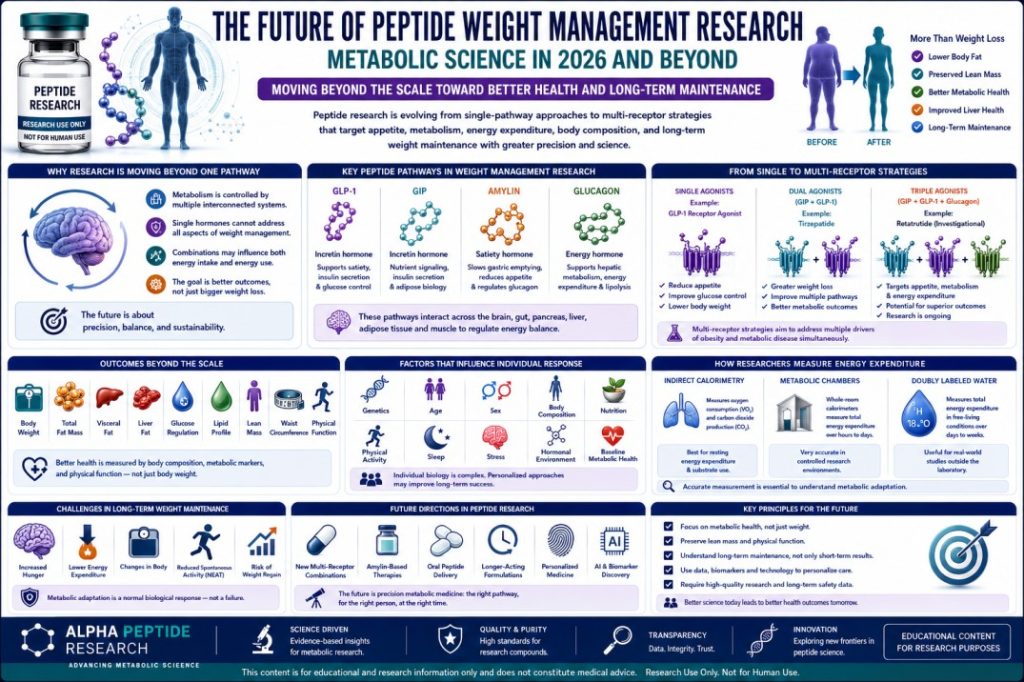
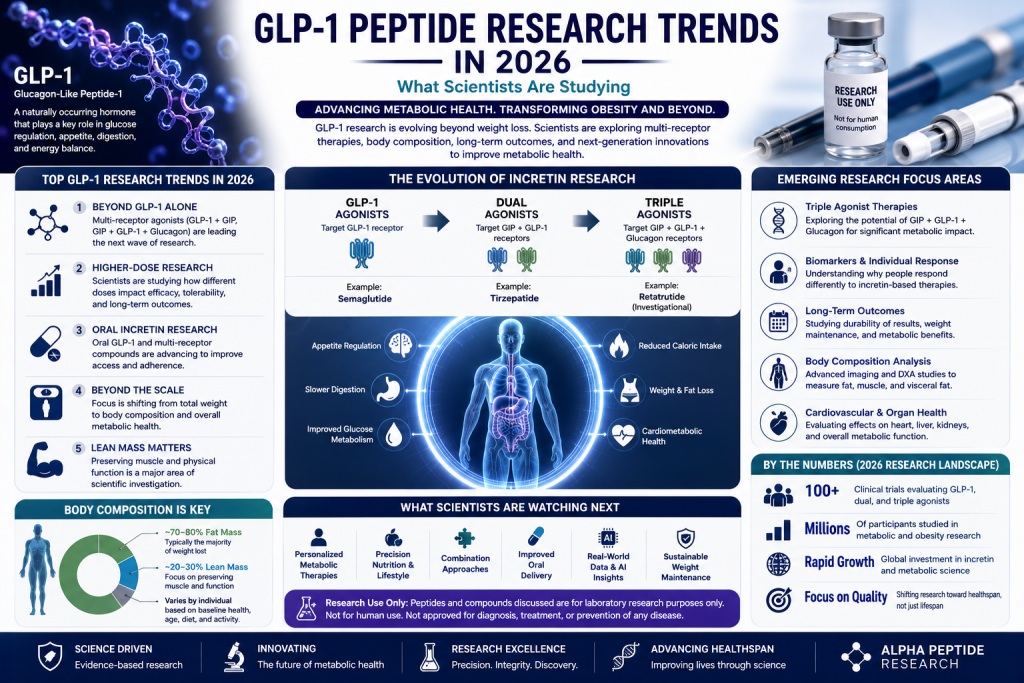
GLP-1 changed the direction of modern weight management research. However, metabolic science is already moving beyond a single receptor pathway. Researchers now study combinations involving GIP, glucagon, and amylin. At the same time, scientists are looking beyond body weight toward body composition, visceral fat, liver health, energy expenditure, and long-term weight maintenance. Consequently, peptide weight […]
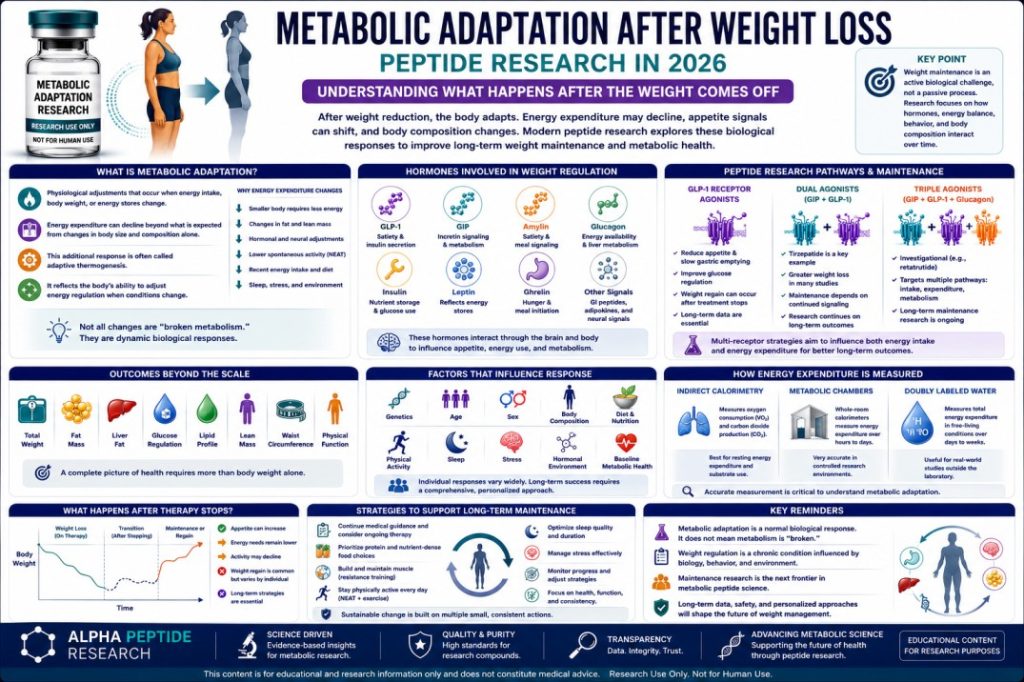
Losing body weight represents only one part of weight management research. Maintaining that change creates another scientific challenge. After weight reduction, the body does not simply continue operating exactly as it did before. Instead, several biological systems can adjust. Energy expenditure may change. Appetite signals can shift. Meanwhile, body composition and energy requirements may also […]
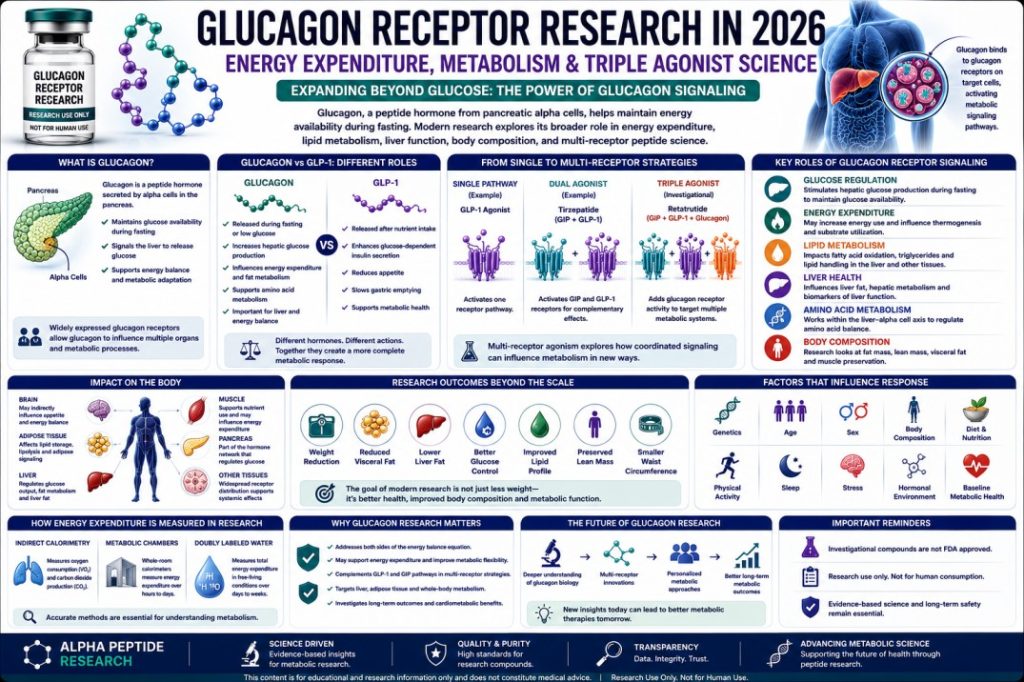
GLP-1 and GIP dominate many discussions about modern metabolic research. However, another pathway is becoming increasingly important. That pathway involves glucagon. Scientists have studied glucagon for decades because of its central role in glucose regulation. More recently, however, researchers have expanded their focus. Glucagon receptor research now intersects with energy expenditure, lipid metabolism, liver biology, […]
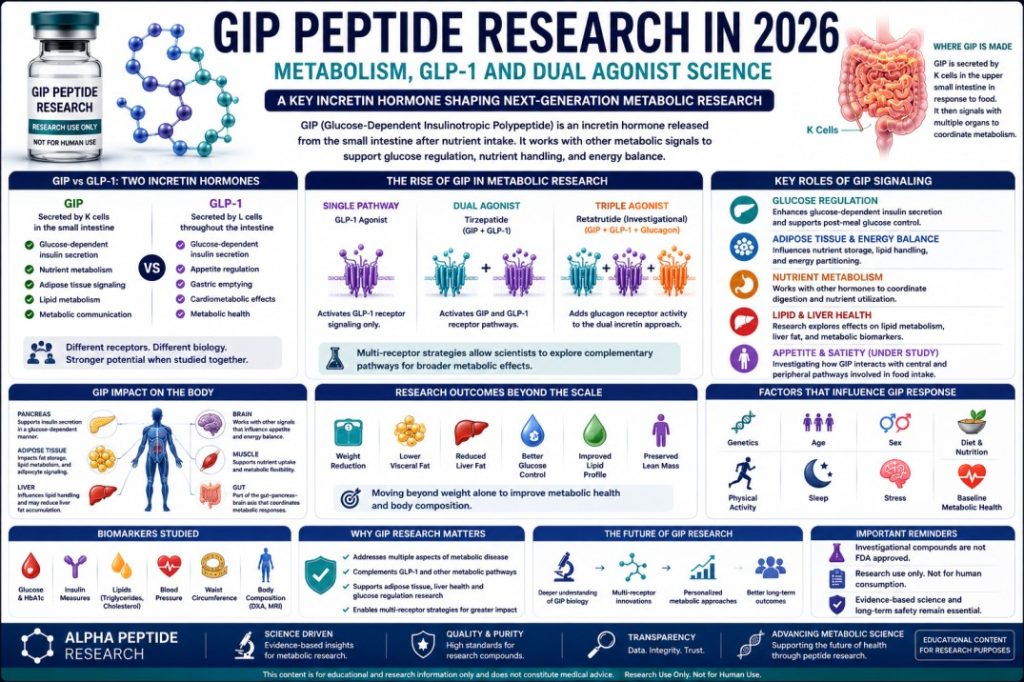
GLP-1 receives enormous attention in modern metabolic science. However, another incretin hormone has become increasingly important. That hormone is GIP. GIP stands for glucose-dependent insulinotropic polypeptide. Scientists have studied it for decades, especially because of its role in nutrient-dependent insulin secretion. Today, however, the research landscape is much broader. Current studies examine GIP in relation […]
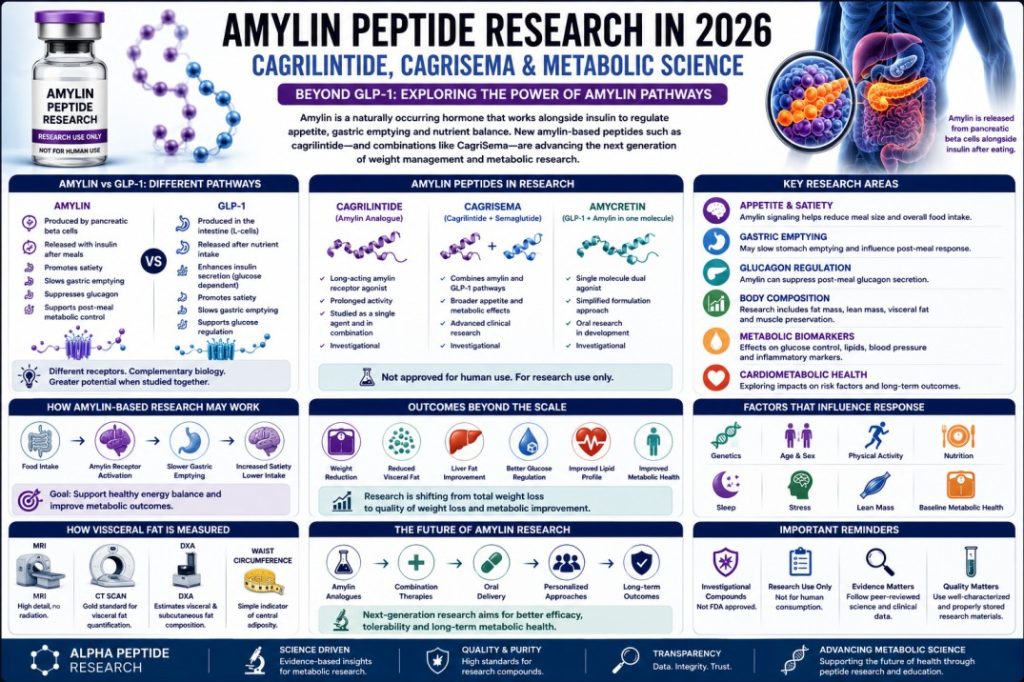
GLP-1 transformed modern metabolic research. However, it is no longer the only peptide pathway attracting major attention. Amylin research is emerging as another important area. Amylin is a naturally occurring peptide hormone involved in satiety and nutrient regulation. Unlike GLP-1, it follows a different signaling pathway. Therefore, researchers can study amylin alone or alongside incretin […]
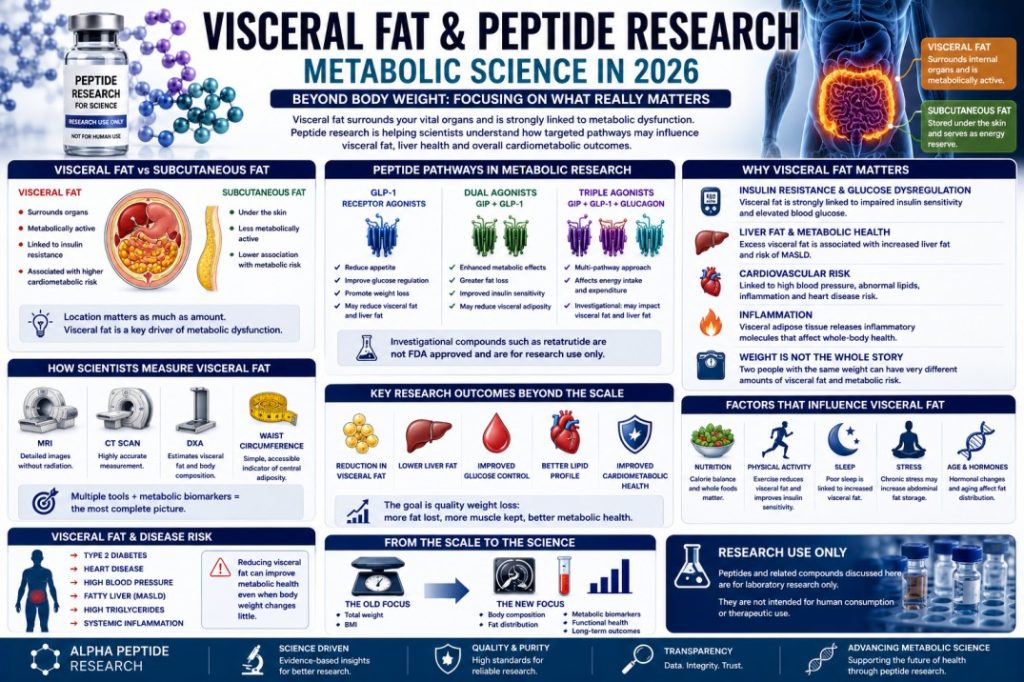
Weight management research is becoming more precise. For decades, researchers relied heavily on body weight and BMI to evaluate obesity. Both measurements remain useful. However, neither tells scientists where the body stores fat. That distinction matters because body fat is not distributed evenly. For example, subcutaneous fat sits beneath the skin. Visceral fat, by contrast, […]
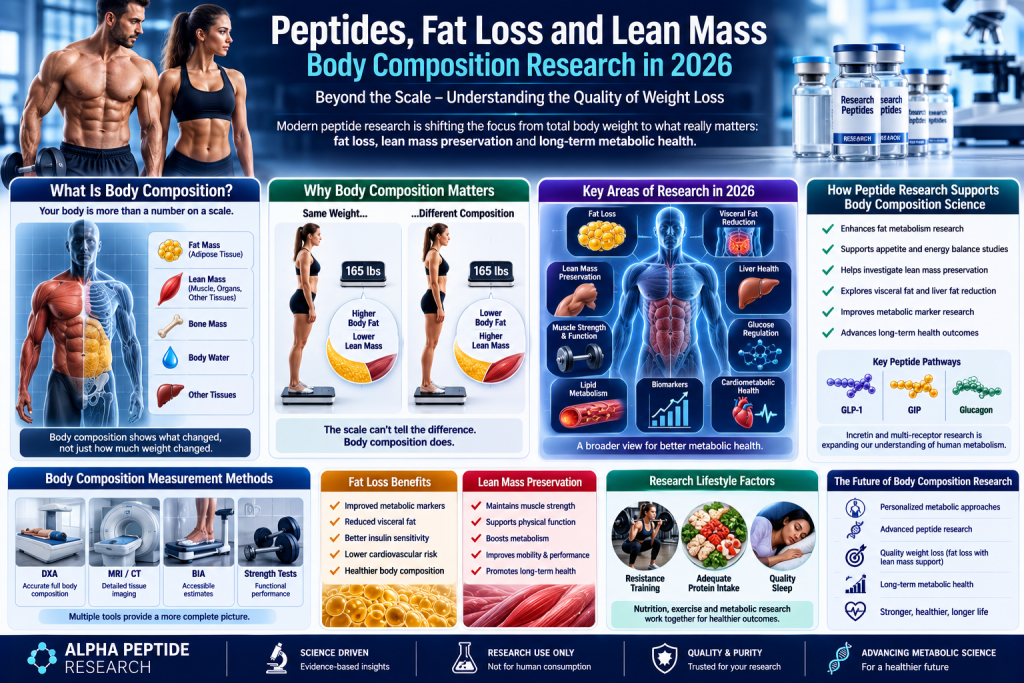
Weight management research is undergoing an important shift. For years, total body weight dominated the conversation. Researchers measured pounds lost, percentage weight change, and body mass index. Those measurements remain useful, but they do not tell the whole story. Scientists increasingly want to know what changed inside the body. How much fat mass changed? What […]
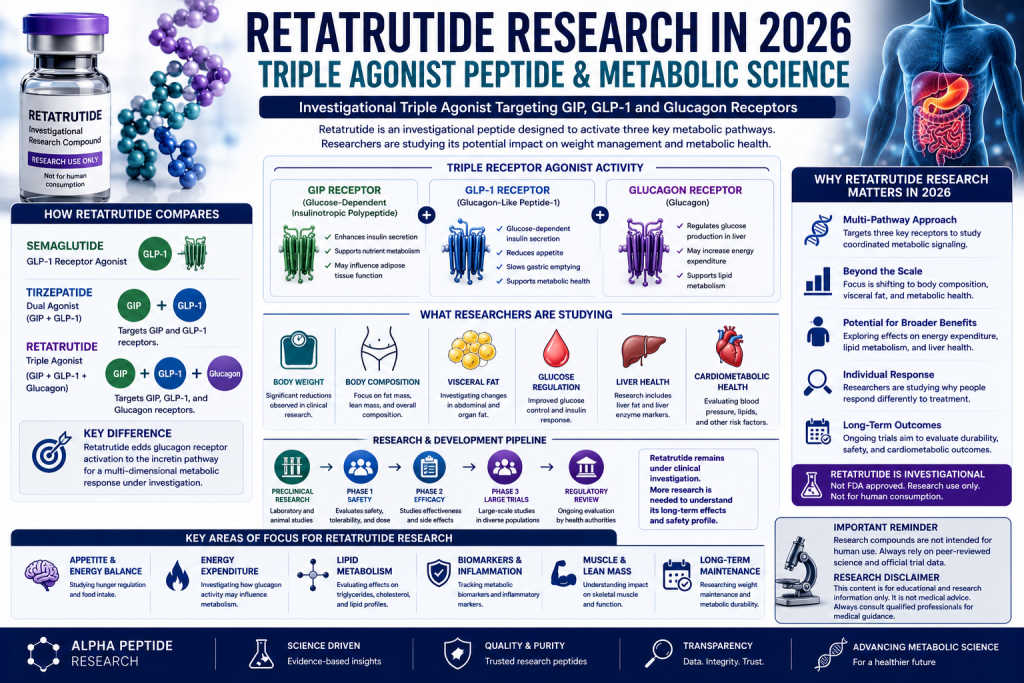
Retatrutide Research in 2026: What Scientists Are Learning About Triple Agonist Peptides Retatrutide research has become one of the most closely watched areas of metabolic science in 2026. The reason is its unusual receptor profile. Retatrutide is an investigational triple agonist designed to activate three metabolic receptor systems: GIP, GLP-1, and glucagon. This distinguishes it […]
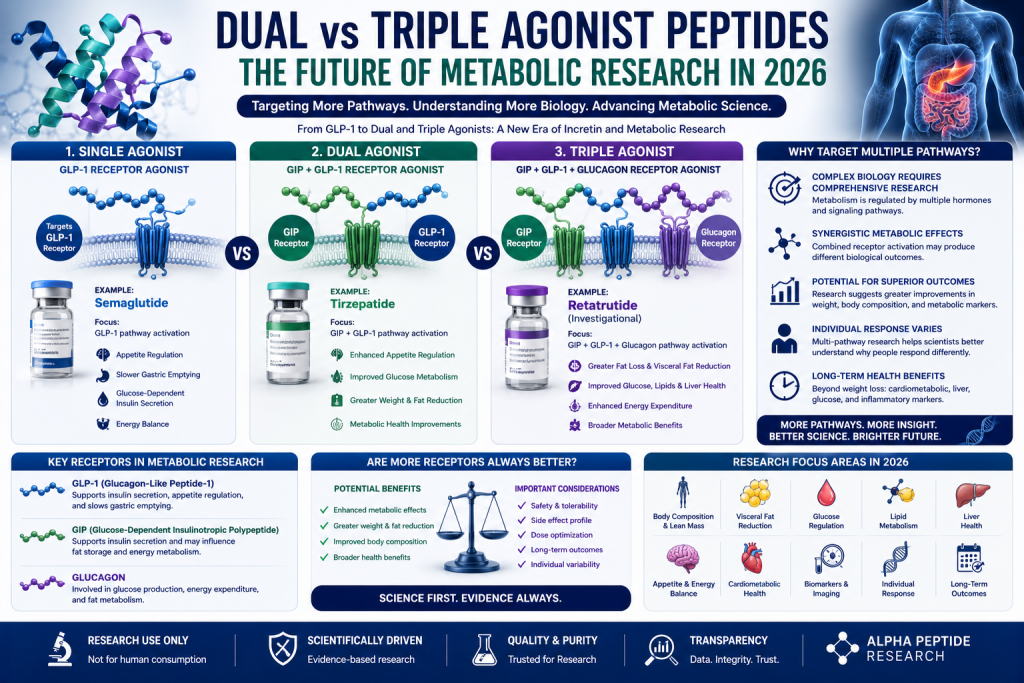
Metabolic peptide research is changing quickly in 2026. For years, GLP-1 receptor agonists dominated discussions surrounding incretin science, obesity, and metabolic health. Researchers are now looking beyond a single receptor. Dual and triple agonists have become major areas of scientific interest. These compounds allow researchers to investigate several metabolic signaling pathways at the same time. […]
GLP-1 peptide research has become one of the most closely watched areas of metabolic science in the United States. What began largely as research into glucose regulation has expanded into obesity, body composition, cardiovascular health, metabolic disease, and next-generation incretin biology. In 2026, the field is moving beyond one simple question: how much weight can […]