

Longevity & Anti Aging
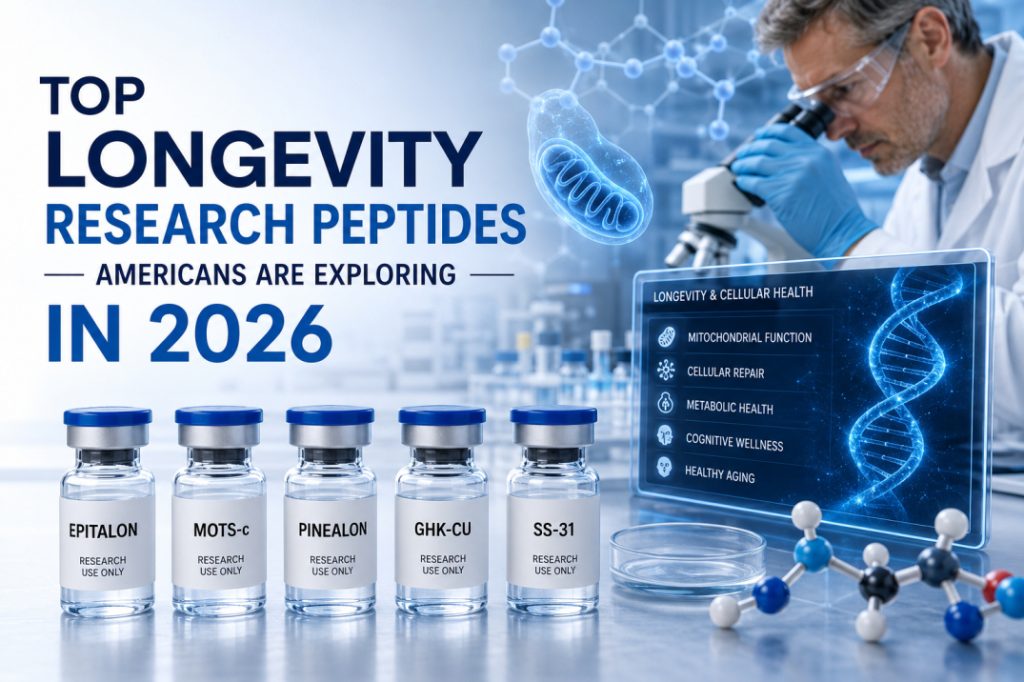
Top Longevity Research Peptides Americans Are Exploring in 2026
Jul
Longevity research has become one of the fastest growing areas in modern biotechnology. Scientists across the United States are exploring innovative compounds that may contribute to healthy aging, cellular function, and metabolic wellness. Interest in longevity science continues to rise as researchers seek to better understand the biological processes associated with aging.
Today, longevity research extends far beyond traditional wellness practices. Advances in peptide science have created exciting opportunities for studying cellular health, mitochondrial function, cognitive wellness, and human performance. As a result, longevity focused peptide research has become a major topic within scientific, biotechnology, and wellness communities.
This guide explores the top longevity research peptides gaining attention in 2026 and examines the scientific trends shaping the future of healthy aging research.
Why Longevity Research Is Growing in America
Americans are becoming increasingly interested in extending healthspan rather than simply increasing lifespan. Healthspan refers to the number of years an individual maintains optimal physical and cognitive function throughout life.
Researchers are studying several factors that influence healthy aging, including:
- Cellular function
- Mitochondrial health
- Metabolic efficiency
- Cognitive performance
- Sleep quality
- Recovery and resilience
- Biological aging processes
Scientific interest in longevity has expanded significantly over the past decade. Longevity clinics, biotechnology companies, and research institutions continue to investigate how emerging compounds may contribute to understanding these complex biological mechanisms.
What Are Longevity Research Peptides?
Longevity research peptides are compounds that scientists study for their potential roles in cellular and metabolic research. These peptides are often investigated in laboratory settings to better understand biological pathways associated with aging and wellness.
Researchers continue to explore how peptide compounds interact with:
- Cellular signaling pathways
- Mitochondrial activity
- Protein synthesis
- Tissue repair mechanisms
- Metabolic regulation
- Cognitive processes
- Recovery pathways
Modern peptide research focuses on scientific discovery rather than guaranteed outcomes. The field continues to evolve as new studies contribute to our understanding of healthy aging and longevity science.
Top Longevity Research Peptides in 2026
Epitalon
Epitalon remains one of the most discussed compounds in longevity research. Scientists continue to investigate its potential role in healthy aging and cellular health studies.
Researchers are particularly interested in its relationship with:
- Cellular aging processes
- Longevity science
- Biological age research
- Healthy aging mechanisms
- Cellular function
Epitalon has become increasingly popular within longevity and biohacking communities because of ongoing scientific interest surrounding its biological properties.
MOTS-c
MOTS-c has gained considerable attention within metabolic health and longevity research. Scientists are actively studying mitochondrial function and cellular energy production to better understand healthy aging.
Current areas of interest include:
- Cellular energy research
- Metabolic health
- Mitochondrial science
- Human performance research
- Healthy aging studies
Mitochondrial health remains one of the most exciting fields within longevity science, making MOTS-c a significant topic of discussion in 2026.
Pinealon
Pinealon continues to generate interest among researchers studying cognitive wellness and healthy aging. Scientific investigations focus on its potential applications in neuroscience and longevity research.
Researchers are exploring topics such as:
- Cognitive function
- Cellular health
- Brain health research
- Healthy aging science
- Longevity related studies
Interest in cognitive longevity continues to grow as scientists seek to better understand how aging affects neurological processes.
GHK-Cu
GHK-Cu is widely studied for its biological properties and its growing relevance within longevity research. Scientific discussions frequently include its role in cellular and tissue related research.
Researchers continue to investigate:
- Cellular health
- Tissue related research
- Wellness science
- Healthy aging mechanisms
- Modern biotechnology applications
Its popularity has expanded beyond traditional peptide research communities and into broader discussions surrounding longevity science.
SS-31
SS-31 has become a major topic within mitochondrial research. Scientists are studying mitochondrial function more closely than ever before, making compounds associated with cellular energy increasingly important in longevity discussions.
Research topics include:
- Cellular energy production
- Mitochondrial science
- Longevity research
- Metabolic function
- Wellness innovation
The growing interest in mitochondrial health has helped establish SS-31 as an emerging longevity research compound.
The Role of Mitochondrial Health in Longevity Science
Mitochondria are often referred to as the powerhouses of the cell. They play an essential role in energy production and cellular function.
Scientists continue to study how mitochondrial health influences:
- Healthy aging
- Metabolic efficiency
- Cognitive wellness
- Recovery science
- Cellular performance
As longevity science advances, mitochondrial research has become one of the most important areas of scientific investigation.
Researchers are increasingly exploring how cellular energy production contributes to maintaining wellness throughout the aging process.
Longevity and Biological Age
Biological age differs from chronological age. Chronological age measures the number of years a person has lived. Biological age reflects how efficiently the body’s biological systems are functioning.
Researchers study several factors that may influence biological aging, including:
- Sleep quality
- Metabolic health
- Cellular function
- Recovery processes
- Cognitive wellness
- Lifestyle factors
Understanding biological age has become central to longevity science in the United States.
Why Biohackers Are Interested in Longevity Research
The biohacking movement has significantly influenced the growth of longevity science. Many wellness enthusiasts are interested in optimizing healthspan through research driven approaches.
Biohacking communities frequently discuss:
- Cellular health
- Sleep optimization
- Recovery science
- Metabolic wellness
- Mitochondrial health
- Cognitive performance
As longevity science evolves, peptide research continues to attract attention from researchers and wellness communities alike.
Longevity Research Trends to Watch in 2026
Several trends are expected to shape longevity science throughout 2026.
Healthy Aging Research
Scientists are increasingly focusing on strategies that promote healthy aging and wellness throughout life.
Mitochondrial Health
Research surrounding cellular energy production continues to expand across the biotechnology industry.
Cognitive Longevity
Brain health and cognitive wellness remain major priorities within longevity science.
Metabolic Optimization
Metabolic health has become one of the fastest growing areas of peptide and longevity research.
Cellular Health Research
Understanding cellular mechanisms continues to influence scientific discoveries related to aging and wellness.
The Future of Longevity Research Peptides
The future of longevity science looks exceptionally promising. Researchers continue to investigate how peptide compounds contribute to understanding cellular health and biological processes associated with aging.
Scientific advancements are creating new opportunities to study:
- Healthy aging
- Cellular function
- Human performance
- Mitochondrial science
- Cognitive wellness
- Metabolic health
- Longevity biology
As research evolves, longevity peptides are expected to remain at the forefront of biotechnology and wellness innovation.
Frequently Asked Questions
What are longevity research peptides?
Longevity research peptides are compounds that scientists study to better understand healthy aging, cellular function, and longevity related biological processes.
Why are longevity peptides trending in 2026?
Interest in healthy aging, mitochondrial health, and wellness science continues to grow across the United States, driving interest in longevity research.
What is healthspan?
Healthspan refers to the number of years an individual maintains optimal physical and cognitive wellness throughout life.
Why is mitochondrial health important?
Mitochondria are responsible for cellular energy production and play an important role in modern longevity research.
What is biological age?
Biological age reflects how efficiently biological systems function and may differ from chronological age.
What areas of longevity science are researchers studying?
Researchers are investigating cellular health, cognitive wellness, metabolic function, mitochondrial science, and healthy aging mechanisms.
Is longevity research growing in America?
Yes. Longevity research continues to expand across biotechnology, wellness, and scientific communities in the United States.
Why do researchers study peptide compounds?
Scientists study peptide compounds to better understand biological pathways and cellular mechanisms associated with wellness and longevity.
What is cognitive longevity?
Cognitive longevity focuses on maintaining healthy brain function throughout the aging process.
What makes longevity science important?
Longevity science seeks to improve our understanding of healthy aging and the biological factors that contribute to overall wellness.
Conclusion
Longevity science is transforming the future of modern biotechnology and wellness research. Scientists continue to explore innovative compounds that contribute to our understanding of healthy aging, mitochondrial function, metabolic health, and cognitive wellness.
The growing interest in longevity research peptides reflects a broader scientific movement toward improving healthspan and advancing cellular science. As new discoveries emerge throughout 2026, longevity research will continue to shape the future of healthy aging and peptide innovation.
At Alpha Peptide Research, we remain committed to providing accurate, research driven educational content that helps readers stay informed about the latest developments in longevity science and peptide research.
