

-
×
 Cartalax 20mg
1 × $67.00
Cartalax 20mg
1 × $67.00
Thymopentin 10mg
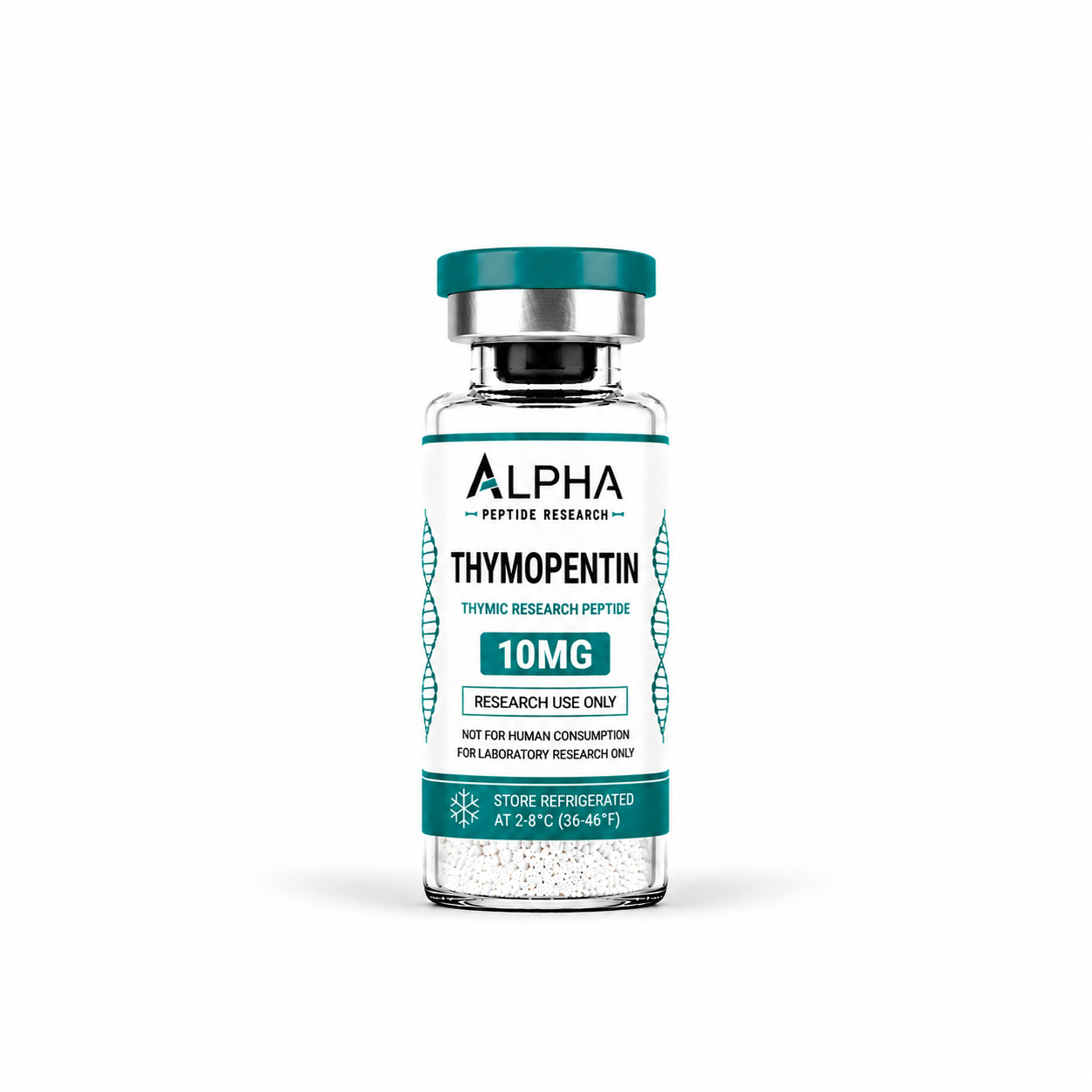
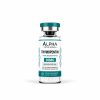
Thymopentin 10mg is a research-grade pentapeptide derived from thymopoietin and supplied by Alpha Peptide Research for controlled laboratory investigation. Researchers have studied Thymopentin in areas including thymic biology, immune-system signaling, T-cell research, cellular differentiation, and peptide-mediated communication. Research Use Only. Not for human consumption.
$100.00
✓
Research Use Only
✓
High Purity Standards
✓
Laboratory Tested
✓
Secure Checkout
✓
Fast & Secure Shipping
Research Use Only
Products offered by Alpha Peptide Research are intended exclusively for laboratory and scientific research. They are not intended for human consumption, therapeutic use, veterinary use, or diagnostic purposes.
Thymopentin 10mg adds another specialized thymic peptide to the Alpha Peptide Research Healing Peptides collection.
Thymopentin is a five-amino-acid peptide fragment derived from thymopoietin. Its research history is closely associated with studies of thymic biology and immune-system regulation.
The thymus has an important role in the development and maturation of T lymphocytes. Consequently, peptides associated with thymic biology have attracted scientific interest in experimental immunology and cellular research.
Thymopentin provides researchers with a small, well-defined peptide for investigating these biological systems under controlled laboratory conditions.
Furthermore, its compact structure makes it useful for research exploring how short peptide sequences can participate in biological signaling.
Alpha Peptide Research supplies Thymopentin 10mg exclusively as a laboratory research material.
What Is Thymopentin?
Thymopentin is a pentapeptide, meaning it contains five amino-acid residues.
It represents a biologically active fragment of the larger thymopoietin molecule. Researchers have investigated this relationship to better understand the biological properties associated with thymic peptides.
Because of its small size, Thymopentin provides an interesting model for studying peptide structure and biological signaling.
Research has examined the peptide in experimental systems involving immune-cell biology, thymic signaling, and cellular differentiation.
Thymopentin Sequence
Thymopentin is commonly described by the amino-acid sequence:
Arg-Lys-Asp-Val-Tyr (RKDVY)
This five-residue sequence represents the core structure traditionally associated with Thymopentin.
However, researchers should verify the exact identity and analytical characterization of any commercial research material through batch-specific documentation.
Sequence confirmation is particularly important when comparing native peptides with modified analogs or related thymic research materials.
Thymopentin and Thymopoietin
Thymopentin is derived from thymopoietin, a larger peptide associated with thymic biology.
Thymopoietin has a much longer amino-acid sequence, whereas Thymopentin represents a short five-residue segment.
Therefore, the two should not be treated as interchangeable research materials.
Studying both molecules can provide researchers with different perspectives on peptide structure and biological signaling.
Thymopentin and Thymic Biology
The thymus provides an important environment for T-cell development.
Researchers investigate numerous molecules associated with thymic function to understand how immune cells develop and communicate.
Thymopentin has been studied within this broader field of thymic biology.
For example, researchers can investigate how a defined thymic peptide behaves in experimental cellular systems.
Additionally, laboratories can compare Thymopentin with other thymic peptides to investigate differences in molecular activity.
This makes the peptide particularly relevant to laboratories studying thymic signaling.
Thymopentin and T-Cell Research
T cells play an important role in adaptive immunity.
Their development involves several stages and depends on complex interactions between developing immune cells and the thymic environment.
As a result, researchers have investigated thymic peptides in relation to T-cell biology.
Thymopentin can be incorporated into controlled experimental models designed to examine specific cellular endpoints.
Researchers may evaluate changes in cellular markers, signaling pathways, or other measurable characteristics.
Importantly, experimental observations should remain within the context of the model used and should not automatically be interpreted as evidence of a clinical effect.
Thymopentin and Immune Signaling
Immune cells communicate through a large network of receptors, cytokines, peptides, and intracellular signaling pathways.
Small peptides can provide useful experimental models for studying these interactions.
Thymopentin has been investigated within research related to immune-system signaling.
Furthermore, researchers can use controlled systems to examine how different concentrations or experimental conditions influence selected molecular endpoints.
Appropriate controls remain essential for determining whether observed changes are associated with the research material.
Thymopentin and Cellular Differentiation
Cellular differentiation describes the process through which cells develop specialized characteristics.
Immune-cell development provides an important example of this biological process.
Because of its connection with thymic biology, Thymopentin has been investigated in experimental research involving immune-cell differentiation.
For instance, laboratories may study cellular markers associated with different stages of immune-cell development.
Additionally, researchers can compare treated and control experimental systems to investigate specific molecular pathways.
These studies contribute to a broader understanding of how peptide signaling interacts with cellular development.
Thymopentin and Cellular Communication
Cells constantly exchange information through chemical and molecular signals.
Peptides can participate in this communication network by interacting with receptors or influencing signaling pathways.
Thymopentin provides researchers with a small peptide sequence for investigating these mechanisms.
Consequently, laboratories can study peptide-associated responses using biochemical assays, cellular models, or other validated research techniques.
The results can help scientists investigate how short peptide sequences relate to broader cellular signaling systems.
Thymopentin and Immunological Research
Immunology involves many interconnected biological systems.
Researchers examine immune cells, signaling molecules, receptors, and tissue environments to understand how these systems interact.
Thymic peptides represent one area of this research.
Within this field, Thymopentin has been investigated as a defined peptide sequence associated with thymic biology.
Researchers can incorporate the peptide into experimental models designed around specific immunological questions.
Moreover, comparing Thymopentin with related thymic peptides can help laboratories investigate differences between peptide structures and biological responses.
Thymopentin vs. Thymulin
Thymopentin and Thymulin are both associated with thymic research, but they are different peptides.
Thymopentin is a five-amino-acid peptide fragment derived from thymopoietin.
Thymulin is commonly described as a nine-amino-acid thymic peptide associated with a zinc-containing biologically active complex.
Therefore, their structures and research profiles differ.
Including both products gives the Healing Peptides category broader coverage of thymic peptide research.
Thymopentin vs. Thymosin Alpha-1
Thymopentin and Thymosin Alpha-1 are also distinct molecules.
Thymopentin contains five amino acids and is derived from thymopoietin.
Thymosin Alpha-1 contains 28 amino acids and is derived from prothymosin alpha.
Consequently, researchers should not substitute one material for the other when designing experiments.
Their different structures provide opportunities to investigate different aspects of thymic peptide biology.
Thymopentin vs. LL-37
LL-37 and Thymopentin belong to different peptide research areas.
LL-37 is a 37-amino-acid human cathelicidin associated extensively with antimicrobial and innate immune research.
Thymopentin, in contrast, is a five-amino-acid thymopoietin-derived peptide associated primarily with thymic and immune-cell research.
As a result, each product provides a different experimental research profile.
Why Choose Thymopentin 10mg?
Thymopentin 10mg provides laboratories with a clearly defined thymic peptide for controlled research.
Key characteristics include:
- 10mg research presentation
- Five-amino-acid peptide
- Pentapeptide structure
- Thymopoietin-derived sequence
- RKDVY sequence
- Thymic biology research
- T-cell research
- Immune signaling research
- Cellular differentiation research
- Cellular communication research
- Immunological research
- Professional laboratory presentation
- Research Use Only labeling
- Not intended for human consumption
Overall, Thymopentin adds another distinct research material to the thymic peptide section of the Healing Peptides category.
Product Specifications
| Specification | Details |
|---|---|
| Product Name | Thymopentin |
| Quantity | 10mg |
| Peptide Length | 5 amino-acid residues |
| Sequence | Arg-Lys-Asp-Val-Tyr (RKDVY) |
| Peptide Type | Pentapeptide |
| Origin | Thymopoietin-derived peptide |
| Product Type | Research Peptide |
| Category | Healing Peptides |
| Primary Research Area | Thymic Biology |
| Additional Research Areas | Immune Signaling, T-Cell & Cellular Research |
| Presentation | Laboratory Research Vial |
| Intended Use | Laboratory Research Only |
| Human Consumption | Not Intended |
| Brand | Alpha Peptide Research |
| Product Number | Healing Peptides #18 |
Thymopentin 10mg Research Presentation
The 10mg presentation provides laboratories with a clearly identified quantity of Thymopentin research material.
Researchers may investigate the peptide in appropriately designed biochemical, cellular, or immunological models.
For example, studies can examine peptide-associated signaling, cellular responses, or relationships with thymic biology.
Furthermore, researchers can compare Thymopentin with related thymic peptides such as Thymulin and Thymosin Alpha-1.
The 10mg designation identifies the quantity of research material supplied. It does not represent a human dose or administration recommendation.
Quality and Analytical Documentation
Reliable peptide characterization is essential for reproducible laboratory research.
For this reason, laboratories should review batch-specific analytical documentation before using Thymopentin 10mg.
Relevant documentation may include:
- Peptide identity
- Sequence confirmation
- Analytical purity
- Molecular characterization
- Batch number
- Quantity
- Manufacturing information where applicable
Additionally, researchers should verify whether a material is native Thymopentin or a modified analog before comparing it with published research.
Exact purity percentages should only be stated when supported by appropriate batch-specific analytical testing.
Similarly, claims regarding third-party testing or manufacturing certifications should only appear when supporting documentation exists.
Storage and Laboratory Handling
Researchers should follow the validated storage requirements provided for the specific Thymopentin 10mg formulation and batch.
Keep the vial securely closed and protect the material from unsuitable environmental conditions.
In addition, laboratories should maintain accurate inventory and batch records.
Qualified personnel should handle research peptides according to established laboratory procedures.
Any storage temperature displayed on the product label should correspond with the verified requirements for the supplied formulation.
Controlled Laboratory Research
Thymopentin 10mg is intended for controlled scientific investigation.
Potential research areas include:
- Thymic biology
- Immune-system signaling
- T-cell research
- Cellular differentiation
- Peptide signaling
- Cellular communication
- Immunological research
For instance, researchers may compare experimental systems containing Thymopentin with appropriate controls while measuring predefined molecular or cellular endpoints.
Moreover, laboratories can use complementary biochemical and cellular techniques to investigate different aspects of peptide biology.
Careful experimental design remains essential when interpreting research results.
Research Use Only
Alpha Peptide Research supplies Thymopentin 10mg exclusively for scientific and laboratory research.
The product is not intended for human consumption, self-administration, diagnosis, therapeutic use, immune-system treatment, anti-aging treatment, or veterinary use.
Furthermore, Thymopentin 10mg should not be marketed as a treatment for immune disorders, infections, inflammatory diseases, aging, or other medical conditions.
The 10mg designation describes research quantity only and does not provide dosing or administration guidance.
Frequently Asked Questions
What is Thymopentin 10mg?
Thymopentin 10mg is a laboratory research presentation containing 10mg of Thymopentin for controlled scientific investigation.
What is Thymopentin?
Thymopentin is a five-amino-acid peptide fragment derived from thymopoietin and associated with research into thymic and immune biology.
How many amino acids does Thymopentin contain?
Thymopentin is a five-amino-acid peptide, also known as a pentapeptide.
What is the Thymopentin sequence?
The commonly reported Thymopentin sequence is Arg-Lys-Asp-Val-Tyr (RKDVY).
Is Thymopentin derived from thymopoietin?
Yes. Thymopentin represents a short peptide fragment derived from thymopoietin.
Why do scientists study Thymopentin?
Researchers study Thymopentin in areas including thymic biology, immune signaling, T-cell research, cellular differentiation, and peptide-mediated communication.
Is Thymopentin studied in T-cell research?
Yes. Its association with thymic biology has made it relevant to experimental research involving T-cell development and related cellular processes.
Is Thymopentin the same as Thymulin?
No. They are different peptides with different amino-acid sequences and structures.
Is Thymopentin the same as Thymosin Alpha-1?
No. Thymopentin is a five-amino-acid peptide, while Thymosin Alpha-1 is a 28-amino-acid peptide.
Is Thymopentin the same as LL-37?
No. LL-37 is a 37-amino-acid human cathelicidin, while Thymopentin is a five-amino-acid thymopoietin-derived peptide.
What does 10mg mean?
The 10mg designation indicates the quantity of research material supplied in the vial. It does not represent a recommended dose.
Can Thymopentin 10mg be used by humans?
No. Alpha Peptide Research supplies this product strictly for laboratory research and not for human consumption or self-administration.
What category does Thymopentin belong to?
Thymopentin belongs to the Healing Peptides category because of its relevance to thymic, immune, and cellular research.
Does Thymopentin treat immune conditions?
No. It is a research material and should not be presented as a treatment for immune conditions or other diseases.
Thymopentin 10mg From Alpha Peptide Research
Thymopentin 10mg expands the Alpha Peptide Research Healing Peptides collection with a specialized thymopoietin-derived research peptide.
Its five-amino-acid structure provides researchers with a compact peptide sequence for investigating thymic biology, immune signaling, T-cell research, cellular differentiation, and peptide-mediated communication.
Furthermore, Thymopentin complements the existing Thymulin and Thymosin Alpha-1 products while remaining a distinct molecular material.
The 10mg presentation provides a clearly identified research quantity for appropriately designed laboratory experiments.
Overall, Thymopentin offers laboratories another useful research material for exploring the complex relationship between peptide signaling and immune-cell biology.
Thymopentin 10mg is for laboratory research only and is not intended for human consumption.
Be the first to review “Thymopentin 10mg”
Related products
-17%
Reviews
There are no reviews yet.