

-
×
 Semaglutide 10mg
1 × $100.00
Semaglutide 10mg
1 × $100.00
KPV 10mg
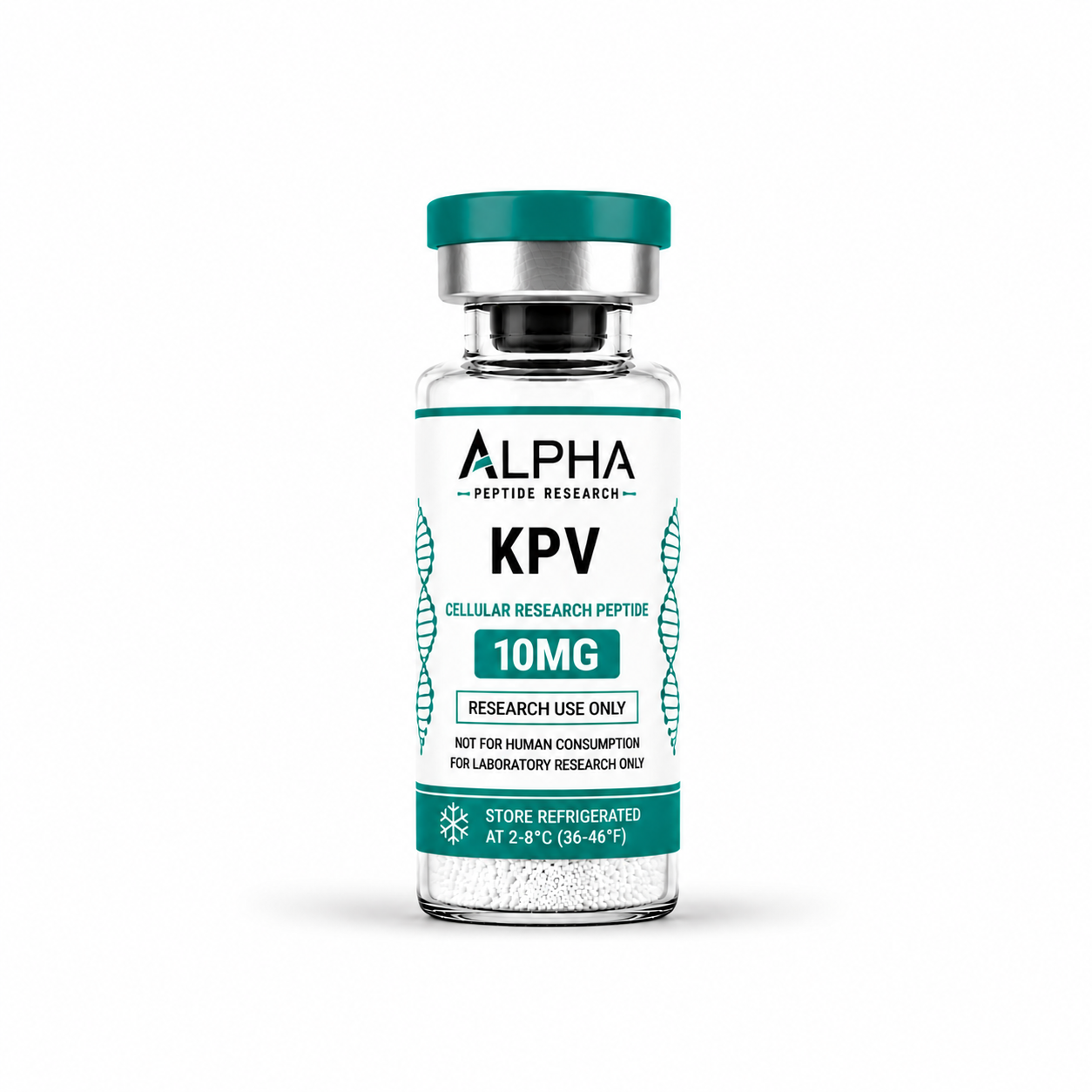
KPV 10mg is an experimental tripeptide research material from Alpha Peptide Research. KPV consists of three amino acids lysine, proline, and valine and researchers have investigated it in preclinical studies involving cellular signaling, inflammatory pathways, intestinal biology, and related mechanisms. Research Use Only. Not for human consumption.
$59.00
✓
Research Use Only
✓
High Purity Standards
✓
Laboratory Tested
✓
Secure Checkout
✓
Fast & Secure Shipping
Research Use Only
Products offered by Alpha Peptide Research are intended exclusively for laboratory and scientific research. They are not intended for human consumption, therapeutic use, veterinary use, or diagnostic purposes.
KPV 10mg introduces a compact three-amino-acid peptide to the Alpha Peptide Research Healing Peptides collection.
KPV stands for Lys-Pro-Val, representing lysine, proline, and valine. Scientists recognize this sequence as the C-terminal tripeptide associated with alpha-melanocyte-stimulating hormone (α-MSH).
Researchers have explored KPV in experimental studies involving inflammatory signaling, cellular responses, intestinal biology, and related molecular pathways.
Its small structure makes KPV particularly interesting for laboratories studying how short peptide sequences interact with biological systems.
However, KPV remains an experimental research material. Alpha Peptide Research supplies KPV 10mg strictly for controlled laboratory investigation.
What Is KPV?
KPV is a tripeptide composed of three amino-acid residues:
Lysine – Proline – Valine
Researchers commonly write its sequence as Lys-Pro-Val.
KPV corresponds to a short sequence associated with the C-terminal region of α-MSH. Scientists have studied this tripeptide independently to investigate biological activity associated with the smaller peptide sequence.
Because KPV contains only three amino acids, researchers can explore its characteristics without working with the entire α-MSH peptide.
This feature has contributed to scientific interest in KPV across several experimental research areas.
Why Do Researchers Study KPV?
Researchers study KPV to explore how a short peptide sequence may interact with cellular and molecular pathways.
Experimental research has investigated KPV in models involving inflammatory signaling and cellular responses.
Scientists have also explored the peptide in gastrointestinal and intestinal research models.
Depending on the study, researchers may measure signaling molecules, cellular markers, gene activity, or other biological endpoints.
These experiments help laboratories understand KPV while keeping conclusions within the limits of preclinical research.
KPV and Inflammatory Signaling Research
Inflammatory signaling involves many cells, proteins, receptors, and molecular pathways.
Scientists investigate these systems to understand how cells respond to biological signals.
KPV has attracted research interest because preclinical studies have explored its interactions with inflammation-related mechanisms.
Researchers may examine changes in selected signaling pathways or biological markers after exposing an experimental model to KPV.
These findings can help scientists identify mechanisms for further study.
However, experimental findings do not establish KPV 10mg as a treatment for inflammatory conditions.
Cellular Signaling Research
Cells use signaling pathways to communicate and coordinate biological functions.
Short peptides can provide useful tools for studying these pathways because researchers can examine how specific sequences interact with cellular systems.
KPV gives laboratories a compact tripeptide for this type of investigation.
Scientists may measure cellular activity, signaling molecules, or other relevant markers depending on their research objectives.
Suitable controls and carefully designed experiments remain essential for interpreting results.
KPV and Intestinal Biology Research
Researchers have also explored KPV in experimental models involving intestinal biology.
The intestinal environment contains epithelial cells, immune-related pathways, microorganisms, signaling molecules, and other biological components.
Scientists use laboratory and preclinical models to investigate how these systems interact.
KPV research has contributed to questions involving cellular responses and inflammatory signaling within gastrointestinal models.
These studies support further scientific investigation but do not establish the research material as a treatment for gastrointestinal disease.
KPV and α-MSH Research
KPV has an important relationship with alpha-melanocyte-stimulating hormone.
α-MSH is a larger peptide involved in several biological processes. KPV represents a short three-amino-acid sequence associated with its C-terminal region.
Scientists can study KPV separately to investigate biological activity associated with this smaller sequence.
This relationship makes KPV useful for research comparing short peptide fragments with larger peptide molecules.
Researchers should still treat KPV and α-MSH as distinct research materials rather than interchangeable products.
Why Choose KPV 10mg?
KPV 10mg adds a short tripeptide to our Healing Peptides research lineup.
Key characteristics include:
- 10mg research presentation
- Three-amino-acid peptide
- Lys-Pro-Val sequence
- α-MSH-associated tripeptide
- Clear KPV product identification
- Professional laboratory vial
- Healing Peptides collection branding
- Research Use Only labeling
- Not intended for human consumption
- Consistent Alpha Peptide Research presentation
Its compact three-residue structure also distinguishes KPV from larger peptides already present in the collection.
Product Specifications
| Specification | Details |
|---|---|
| Product Name | KPV |
| Quantity | 10mg |
| Sequence | Lys-Pro-Val |
| Peptide Length | 3 amino-acid residues |
| Product Type | Experimental Research Tripeptide |
| Category | Healing Peptides |
| Research Areas | Cellular & Inflammatory Signaling Research |
| Presentation | Laboratory Research Vial |
| Intended Use | Laboratory Research Only |
| Human Consumption | Not Intended |
| Brand | Alpha Peptide Research |
| Product Number | Healing Peptides #7 |
KPV 10mg Research Presentation
The 10mg presentation provides laboratories with a clearly identified quantity of KPV research material.
Researchers may use appropriately characterized KPV in biochemical, cellular, analytical, or other controlled experiments.
The 10mg specification describes the amount of research material supplied.
It does not represent a dose, administration recommendation, or treatment protocol.
Laboratories should determine material requirements according to their experimental objectives and procedures.
Quality and Analytical Documentation
Accurate peptide research depends on reliable product characterization.
Researchers should review available batch documentation before using KPV 10mg.
Relevant information may include product identity, sequence confirmation, batch number, analytical purity, molecular characterization, and quantity.
Only publish a specific purity percentage when analytical results support the claim for the relevant batch.
The same principle applies to claims about independent testing or manufacturing standards.
Storage and Laboratory Handling
Follow the validated storage requirements supplied for the specific KPV 10mg formulation and batch.
Laboratories should protect the material from unsuitable conditions and maintain accurate records for storage, inventory, and batch identification.
Qualified personnel should handle experimental peptide materials according to their laboratory procedures.
Any storage temperature printed on the vial should match verified documentation for the actual product.
Controlled Laboratory Research
KPV 10mg supports controlled scientific studies involving peptide and cellular biology.
Researchers may explore inflammatory signaling, cellular responses, intestinal biology, peptide structure, or other relevant mechanisms.
Scientists should use appropriate controls and clearly defined endpoints.
They should also document experimental conditions carefully to support reliable interpretation and reproducibility.
Research Use Only
Alpha Peptide Research supplies KPV 10mg exclusively for scientific and laboratory research.
The product is not intended for human consumption, self-administration, therapeutic use, diagnosis, or veterinary treatment.
The 10mg designation identifies research quantity only and does not provide dosing guidance.
Frequently Asked Questions
What is KPV 10mg?
KPV 10mg is a 10mg laboratory presentation of the experimental tripeptide KPV.
What does KPV stand for?
KPV represents the amino acids lysine, proline, and valine.
What is the KPV sequence?
The peptide sequence is Lys-Pro-Val.
How many amino acids does KPV contain?
KPV contains three amino-acid residues, making it a tripeptide.
Is KPV related to α-MSH?
Yes. KPV corresponds to a short C-terminal sequence associated with alpha-melanocyte-stimulating hormone.
Why do scientists research KPV?
Researchers have explored KPV in preclinical studies involving cellular responses, inflammatory signaling, intestinal biology, and related molecular mechanisms.
Is KPV researched in intestinal biology?
Yes. Experimental research has investigated KPV in models involving intestinal and gastrointestinal biological processes.
Does KPV 10mg treat inflammation?
No such claim should be made. Researchers have investigated inflammation-related mechanisms, but this laboratory product is not an approved treatment for inflammatory conditions.
What does 10mg mean?
It describes the amount of research material supplied in the vial. It does not represent a recommended dose.
Is KPV 10mg intended for human consumption?
No. Alpha Peptide Research supplies KPV 10mg for laboratory research only.
How should researchers store KPV 10mg?
Follow the verified storage requirements for the specific formulation and batch.
KPV 10mg From Alpha Peptide Research
KPV 10mg adds a compact tripeptide research material to the Alpha Peptide Research Healing Peptides collection.
Its Lys-Pro-Val sequence and relationship with α-MSH have contributed to research involving cellular signaling, inflammatory pathways, intestinal biology, and other biological mechanisms.
The 10mg presentation provides laboratories with a dedicated format for appropriately designed scientific studies.
Clear product identification, professional packaging, appropriate analytical documentation, and research-use labeling help researchers evaluate the material accurately.
KPV 10mg is for laboratory research only and is not intended for human consumption.
Be the first to review “KPV 10mg”
Related products
-9%
Reviews
There are no reviews yet.