

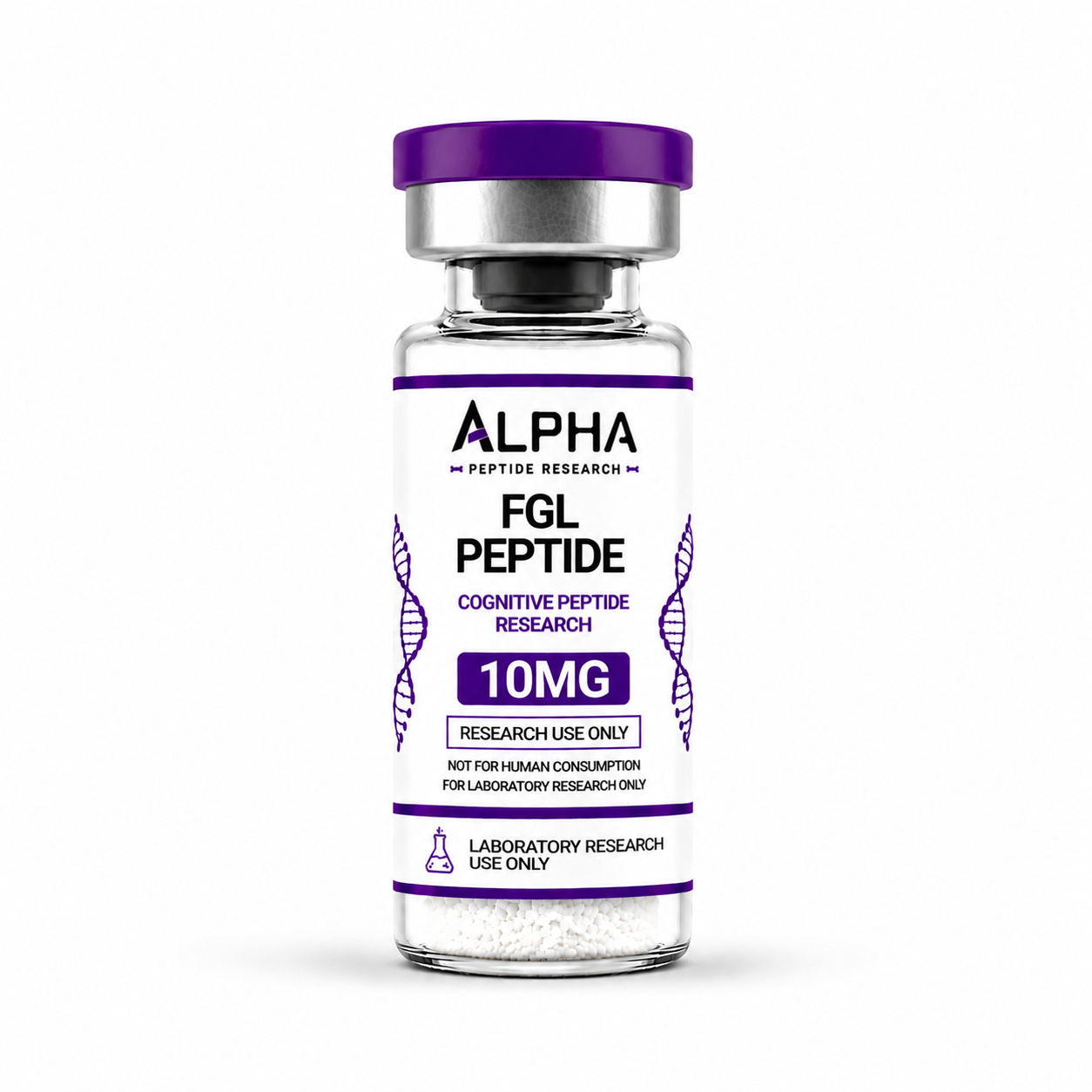
FGL Peptide 10mg
FGL Peptide 10mg is an experimental laboratory research peptide supplied by Alpha Peptide Research for controlled scientific investigations involving neuroscience, peptide signaling, and related biological mechanisms. The 10mg presentation provides researchers with clearly identified material for laboratory studies. Research Use Only. Not for human consumption.
$150.00
Research Use Only
Products offered by Alpha Peptide Research are intended exclusively for laboratory and scientific research. They are not intended for human consumption, therapeutic use, veterinary use, or diagnostic purposes.
FGL Peptide 10mg is an experimental research peptide intended for controlled scientific and laboratory investigations. Alpha Peptide Research supplies this 10mg presentation for researchers exploring peptide signaling, neuroscience, cellular interactions, and related biological mechanisms.
FGL has attracted scientific interest because of research involving neural cell adhesion molecule-related signaling and pathways associated with fibroblast growth factor receptors. These mechanisms have contributed to its investigation within experimental neuroscience.
However, FGL remains an investigational research material. Laboratory findings should not be interpreted as evidence that FGL provides established cognitive benefits or treats neurological conditions in humans.
What Is FGL Peptide?
FGL is a synthetic peptide associated with experimental research involving the neural cell adhesion molecule (NCAM).
NCAM participates in biological processes involving cellular interactions within the nervous system. Researchers have investigated peptide fragments and mimetics associated with NCAM to better understand the signaling mechanisms involved.
FGL has therefore appeared in preclinical neuroscience research examining molecular signaling and neural biology.
Furthermore, studies involving FGL have contributed to broader scientific questions surrounding peptide-receptor interactions and nervous-system signaling.
FGL and FGFR Research
One area of scientific interest surrounding FGL involves the fibroblast growth factor receptor (FGFR) family.
FGFRs are receptor tyrosine kinases involved in multiple biological processes. Researchers investigate these receptors to understand how extracellular signals influence cellular responses.
Experimental work involving FGL has explored mechanisms associated with NCAM and FGFR signaling.
Consequently, FGL can provide researchers with an interesting experimental material when investigating these pathways within appropriate laboratory models.
Nevertheless, biological mechanisms observed in experimental systems do not automatically translate into therapeutic outcomes.
FGL in Neuroscience Research
FGL has attracted attention in experimental neuroscience because NCAM-related signaling plays a role in nervous-system biology.
Researchers may use suitable models to examine molecular interactions, cellular responses, signaling pathways, or other measurable biological characteristics associated with the peptide.
Additionally, preclinical research has investigated FGL in contexts involving neural plasticity and cognitive processes.
These findings remain research observations. Therefore, FGL Peptide 10mg should not be marketed as a product that improves memory, learning, intelligence, or cognitive performance.
Instead, its value lies in providing researchers with material for controlled investigation of the underlying biological mechanisms.
Why Choose FGL Peptide 10mg?
FGL Peptide 10mg adds a specialized experimental neuroscience material to the Alpha Peptide Research Cognitive Peptides collection.
Key product characteristics include:
- 10mg research presentation
- Clearly identified FGL Peptide labeling
- Professional laboratory research vial
- Cognitive Peptides collection branding
- Research Use Only designation
- Intended for controlled scientific investigation
- Consistent Alpha Peptide Research presentation
- Not intended for human consumption
Furthermore, its dedicated product page allows researchers to locate product information without confusing experimental findings with established clinical effects.
Product Specifications
| Specification | Details |
|---|---|
| Product Name | FGL Peptide |
| Strength | 10mg |
| Product Type | Experimental Research Peptide |
| Category | Cognitive Peptides |
| Research Areas | Neuroscience & Peptide Signaling |
| Presentation | Research Vial |
| Intended Use | Laboratory Research Only |
| Human Consumption | Not Intended |
| Brand | Alpha Peptide Research |
Research Areas Associated With FGL
Researchers have investigated FGL within several overlapping areas of experimental neuroscience.
These include NCAM-related signaling, FGFR-associated mechanisms, cellular communication, neural biology, peptide signaling, and experimental neurobiology.
Depending on the study design, laboratories may investigate molecular characteristics, signaling interactions, stability, or measurable biological responses.
Moreover, FGL research can contribute to broader investigations into how relatively small peptide structures interact with complex signaling networks.
Scientists should interpret findings according to the experimental model and limitations of each study.
Quality and Analytical Documentation
Reliable scientific research requires appropriately characterized experimental materials.
Therefore, laboratories should review analytical information associated with the specific FGL Peptide 10mg batch before incorporating it into an experimental protocol.
Relevant documentation may include product identity, lot information, analytical purity data, and other characterization results.
Alpha Peptide Research should publish exact purity percentages only when batch-specific documentation supports them. Likewise, claims regarding independent testing or manufacturing standards should reflect verifiable evidence.
Clear analytical documentation allows researchers to make informed decisions about experimental materials.
Storage and Laboratory Handling
Researchers should store FGL Peptide 10mg according to validated instructions provided for the specific formulation and batch.
Keep the vial securely closed and protect the material from unsuitable environmental conditions. Laboratories should also maintain accurate batch and inventory records throughout their research.
Furthermore, qualified personnel should handle research peptides according to applicable laboratory procedures and institutional safety requirements.
Any specific temperature recommendation should reflect validated product documentation rather than a generic storage condition applied automatically to every peptide.
Controlled Laboratory Research
FGL Peptide 10mg is designed for legitimate laboratory research rather than personal experimentation.
Researchers may incorporate the material into appropriately designed analytical, biochemical, cellular, or preclinical research systems depending on their scientific objectives.
For example, researchers may investigate peptide characteristics, molecular interactions, receptor-associated pathways, or other relevant biological mechanisms.
Experimental design, controls, documentation, and appropriate interpretation remain essential for producing meaningful scientific results.
Research Use Only
FGL Peptide 10mg is supplied exclusively for scientific and laboratory research.
This product is:
- Not for human consumption
- Not intended for self-administration
- Not a medicine
- Not intended for therapeutic use
- Not intended for diagnostic use
- Not intended for veterinary administration
- Not intended to prevent, treat, or cure disease
Researchers should handle FGL according to applicable regulations, institutional requirements, and laboratory safety procedures.
Frequently Asked Questions
What is FGL Peptide 10mg?
FGL Peptide 10mg is a 10mg presentation of an experimental peptide associated with neuroscience and peptide-signaling research.
Why is FGL studied in neuroscience?
Researchers have investigated FGL because of its association with NCAM-related signaling and mechanisms involving fibroblast growth factor receptors.
What does NCAM mean?
NCAM stands for Neural Cell Adhesion Molecule, a protein family involved in cellular interactions and nervous-system biology.
What does FGFR mean?
FGFR stands for Fibroblast Growth Factor Receptor. FGFRs belong to a family of receptor tyrosine kinases involved in cellular signaling.
Is FGL Peptide 10mg intended for human consumption?
No. Alpha Peptide Research supplies this product exclusively for scientific and laboratory research.
Does FGL improve memory or cognition?
FGL has been investigated in preclinical neuroscience research, but those findings do not establish FGL Peptide 10mg as a clinically proven cognitive enhancer.
How should researchers store FGL Peptide 10mg?
Researchers should follow the validated storage requirements provided for the specific product and batch.
Is a Certificate of Analysis available?
If a batch-specific Certificate of Analysis is available, the product page can provide or reference it. A COA should not be promised unless documentation exists for the supplied batch.
Why Choose FGL Peptide 10mg From Alpha Peptide Research?
FGL Peptide 10mg expands the Alpha Peptide Research Cognitive Peptides collection with a specialized material associated with experimental neural signaling research.
Its 10mg presentation provides straightforward product identification, while clear research-use restrictions help distinguish laboratory research from consumer or therapeutic applications.
Furthermore, accurate scientific descriptions and batch-specific analytical documentation can help researchers evaluate the product before incorporating it into controlled experiments.
For laboratories investigating NCAM, FGFR-associated signaling, peptide biology, or experimental neuroscience, FGL Peptide 10mg provides a dedicated research presentation within the Alpha Peptide Research catalog.
Be the first to review “FGL Peptide 10mg”
Related products
Reviews
There are no reviews yet.