

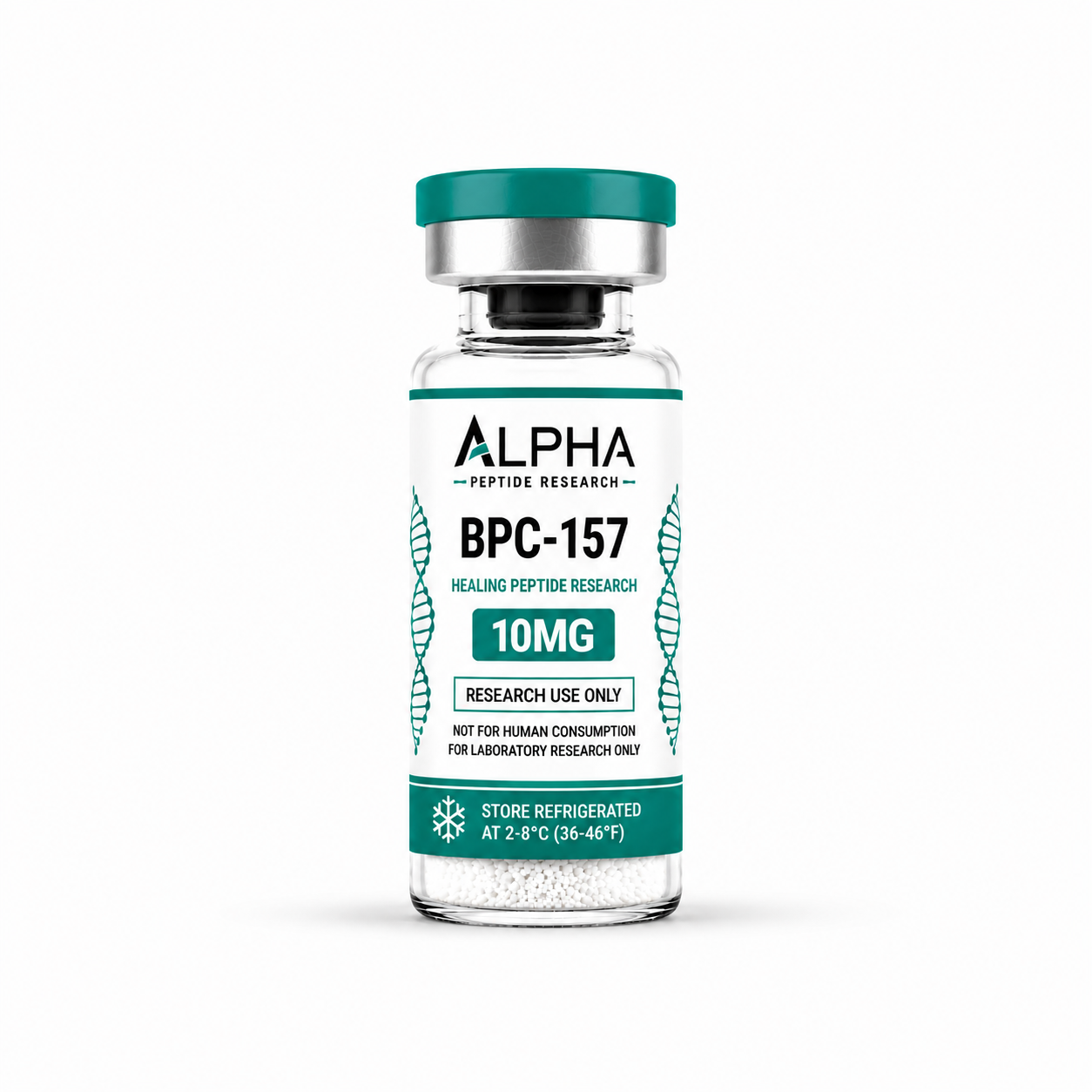
BPC-157 10mg
BPC-157 10mg is an experimental 15-amino-acid research peptide supplied by Alpha Peptide Research for controlled laboratory investigations involving peptide biology, cellular signaling, tissue-response mechanisms, gastrointestinal research, and related preclinical studies. The 10mg presentation is clearly labeled for scientific research applications. Research Use Only. Not for human consumption.
$55.00
Research Use Only
Products offered by Alpha Peptide Research are intended exclusively for laboratory and scientific research. They are not intended for human consumption, therapeutic use, veterinary use, or diagnostic purposes.
BPC-157 10mg is an experimental research peptide from Alpha Peptide Research. It belongs to our Healing Peptides collection and supports controlled laboratory studies involving peptide biology, cellular activity, tissue responses, and related areas of preclinical research.
Researchers have studied BPC-157 in experimental models involving gastrointestinal tissues, blood vessels, cellular signaling, and tissue-response processes. These studies have made BPC-157 a widely discussed compound within peptide research.
However, most research involving BPC-157 remains preclinical. Scientists still need more evidence to understand its properties and potential applications fully. Therefore, Alpha Peptide Research offers BPC-157 10mg strictly for laboratory research.
What Is BPC-157?
BPC-157 is a synthetic peptide that contains 15 amino acids. Researchers commonly use the name Body Protection Compound when referring to BPC.
Scientists have explored BPC-157 in different laboratory and preclinical models. Their studies examine how the peptide interacts with cells, tissues, signaling pathways, and other biological systems.
These areas include tissue biology, gastrointestinal research, vascular biology, and cellular signaling.
BPC-157 remains an experimental compound. Researchers should evaluate it within controlled scientific studies rather than assume that laboratory findings will produce the same results in humans.
Why Do Researchers Study BPC-157?
The body uses many biological processes when tissues respond to damage or changing conditions. Cells communicate through complex signaling networks. Blood vessels, proteins, extracellular structures, and other systems also contribute to these responses.
Researchers study BPC-157 to explore some of these processes under controlled laboratory conditions.
For example, scientists may examine how cells respond to BPC-157 or investigate changes in selected biological pathways. They may also study molecular interactions and other measurable responses.
This research helps scientists understand the peptide and its biological characteristics more clearly.
BPC-157 and Tissue Biology Research
Tissue biology remains an important area of BPC-157 research.
Scientists have investigated BPC-157 in preclinical models that examine different tissues and biological responses. These studies help researchers explore cellular activity, signaling pathways, and other processes that may influence tissue behavior.
Researchers can also compare BPC-157 with controls or other experimental compounds. These comparisons may reveal differences that deserve further study.
However, results from laboratory and animal models do not automatically apply to humans. Researchers must evaluate each finding within the conditions of the original experiment.
For this reason, BPC-157 10mg serves as a research material rather than a treatment for injuries or medical conditions.
Gastrointestinal Research
Researchers have also studied BPC-157 in experimental models involving the gastrointestinal system.
The gastrointestinal tract contains many tissues, cell types, signaling pathways, and biological processes. Scientists use controlled models to explore how experimental compounds interact with these systems.
BPC-157 research may examine cellular responses, tissue characteristics, molecular pathways, and other measurable factors.
These studies contribute to our understanding of peptide biology. However, they do not establish BPC-157 as an approved treatment for gastrointestinal conditions.
Vascular Biology Research
Blood vessels play an important role throughout the body. They transport oxygen and nutrients while supporting many tissue processes.
Scientists have explored BPC-157 in preclinical research involving vascular biology. Researchers may examine endothelial cells, molecular signals, vessel-related responses, and other biological processes.
These experiments help scientists investigate how BPC-157 behaves under specific research conditions.
Researchers should interpret the results carefully because different models can produce different outcomes.
Cellular Signaling Research
Cells constantly send and receive signals. These signals help control growth, communication, movement, and many other biological functions.
Researchers use experimental peptides to study these signaling networks.
BPC-157 gives scientists another research compound for exploring cellular responses and molecular pathways. Depending on the experiment, researchers may measure specific markers, cellular activity, or other biological changes.
Good experimental design remains essential. Scientists should use suitable controls, reliable methods, and accurate records when studying BPC-157.
BPC-157 5mg vs. BPC-157 10mg
Alpha Peptide Research offers BPC-157 5mg and BPC-157 10mg within the Healing Peptides collection.
The main difference is the quantity of research material in each vial.
BPC-157 5mg provides the smaller presentation. In contrast, BPC-157 10mg provides twice that amount.
Both options support laboratory research. The different quantities allow laboratories to select a product according to their research needs and inventory requirements.
The strength labels describe product quantity only. They do not provide dosing instructions for humans or animals.
Why Choose BPC-157 10mg?
BPC-157 10mg gives laboratories a larger research presentation for studies involving BPC-157 and peptide biology.
Key product features include:
- 10mg research presentation
- 15-amino-acid peptide
- Clear BPC-157 product identification
- Professional laboratory vial
- Healing Peptides collection branding
- Clear Research Use Only labeling
- Designed for controlled laboratory studies
- Not intended for human consumption
- Consistent Alpha Peptide Research packaging
The 10mg presentation complements BPC-157 5mg and expands the available research quantities within the collection.
Product Specifications
| Specification | Details |
|---|---|
| Product Name | BPC-157 |
| Quantity | 10mg |
| Peptide Length | 15 amino acids |
| Product Type | Experimental Research Peptide |
| Category | Healing Peptides |
| Research Areas | Peptide Biology and Tissue Research |
| Presentation | Laboratory Research Vial |
| Intended Use | Laboratory Research Only |
| Human Consumption | Not Intended |
| Brand | Alpha Peptide Research |
BPC-157 10mg Research Presentation
The 10mg presentation gives researchers more material than the BPC-157 5mg option.
Laboratories may choose this presentation when their research programs require a larger quantity of BPC-157.
The 10mg label describes the quantity inside the vial. It does not provide a dose, administration recommendation, or experimental protocol.
Researchers should determine the amount required for each experiment according to their laboratory procedures and study design.
Quality and Analytical Documentation
Reliable research starts with well-characterized materials.
Researchers should review the available analytical documents for each BPC-157 10mg batch before starting an experiment.
Useful information may include product identity, batch number, purity results, molecular data, and quantity verification.
Alpha Peptide Research should only publish an exact purity percentage when analytical results support that number for the relevant batch.
The same principle applies to testing and manufacturing claims. Supporting documentation should verify any claim about independent testing, manufacturing standards, or product quality.
Clear documentation helps researchers make informed decisions about the materials they use.
Storage and Laboratory Handling
Follow the storage instructions that accompany the specific BPC-157 10mg formulation and batch.
Keep the vial securely closed and protect the material from unsuitable conditions. Laboratories should also record batch numbers, storage information, and inventory details.
Qualified researchers should follow their laboratory’s safety procedures when handling research peptides.
If validated product documentation requires refrigeration at 2–8°C (36–46°F), use that condition on the product page and label. If your formulation requires another storage condition, use the verified requirement instead.
Controlled Laboratory Research
BPC-157 10mg supports legitimate scientific research.
Researchers may study the peptide through analytical, biochemical, cellular, or preclinical experiments. The exact approach depends on the goals of the study.
Scientists may investigate molecular characteristics, cellular responses, signaling pathways, tissue biology, or related mechanisms.
Researchers should use appropriate controls and record their methods carefully. They should also interpret results within the limits of each experimental model.
These practices improve research quality and make results easier to evaluate.
Part of the Healing Peptides Collection
BPC-157 10mg is Product #2 in the Alpha Peptide Research Healing Peptides collection.
It follows BPC-157 5mg and provides a larger research quantity within the BPC-157 range.
The Healing Peptides collection focuses on experimental compounds associated with research into tissue biology, cellular processes, peptide signaling, and related biological mechanisms.
Our teal and emerald visual identity also separates this collection from the purple Cognitive Peptides range.
Research Use Only
Alpha Peptide Research supplies BPC-157 10mg exclusively for scientific and laboratory research.
Do not use this product for human consumption or self-administration. It is not a medicine, diagnostic product, or veterinary treatment.
The product does not claim to prevent, treat, or cure disease.
Researchers should handle BPC-157 according to applicable laboratory rules, institutional requirements, and safety procedures.
Frequently Asked Questions
What is BPC-157 10mg?
BPC-157 10mg contains a 10mg research presentation of an experimental peptide composed of 15 amino acids.
What does BPC-157 mean?
Researchers commonly refer to BPC as Body Protection Compound. BPC-157 identifies the experimental peptide discussed in scientific research.
How many amino acids does BPC-157 contain?
BPC-157 contains 15 amino acids.
Why do scientists research BPC-157?
Scientists have investigated BPC-157 in preclinical studies involving tissue biology, gastrointestinal processes, vascular biology, cellular signaling, and related mechanisms.
What is the difference between BPC-157 5mg and 10mg?
The products contain different quantities. The 5mg presentation provides 5mg, while the 10mg presentation provides 10mg of research material.
Does BPC-157 heal injuries?
Researchers have studied BPC-157 in preclinical models involving tissue responses. Current evidence does not establish this research product as an approved treatment for human injuries.
Can people consume BPC-157 10mg?
No. Alpha Peptide Research supplies this product for laboratory research only.
What does 10mg mean?
It describes the quantity of research material in the vial. It does not represent a dosing recommendation.
How should researchers store BPC-157 10mg?
Follow the verified storage instructions for the specific product and batch.
Does BPC-157 10mg come with a Certificate of Analysis?
Only state that a Certificate of Analysis is available when you have batch-specific documentation to provide.
BPC-157 10mg From Alpha Peptide Research
BPC-157 10mg expands the Alpha Peptide Research Healing Peptides collection with a larger research presentation for laboratories studying peptide biology.
Researchers have explored BPC-157 in preclinical studies involving tissue biology, gastrointestinal processes, vascular mechanisms, cellular signaling, and related areas.
The 10mg format complements BPC-157 5mg and gives laboratories another quantity option for their research programs.
Clear labeling, professional packaging, accurate product information, and appropriate analytical documentation help researchers evaluate BPC-157 10mg for controlled scientific studies.
BPC-157 10mg is for laboratory research only and is not intended for human consumption.
Be the first to review “BPC-157 10mg”
Related products
Reviews
There are no reviews yet.